Issues
Astoria is an incredible place to live, but loving this city also means being willing to talk honestly about the challenges in front of us.
Our infrastructure is aging. Housing is increasingly difficult for working people to afford. Too many of our young people grow up here and have to leave to find a career. Small businesses face rising costs and limited opportunities to expand.
These problems are connected.
We cannot build enough housing without the water, sewer, streets, and other infrastructure to support it. We cannot recruit living-wage businesses if we cannot provide the infrastructure, workforce, and housing they need. And we cannot prepare Astoria for earthquakes, landslides, storms, and other emergencies without investing in the systems our community depends on.
My approach is straightforward: take care of the foundation first, then build on it.
Infrastructure: The Foundation of Everything Else
Astoria has more than a century of history beneath our feet, and unfortunately some of our pipes are nearly as old.
The City’s current draft Public Works Capital Improvement Plan identifies roughly $246 million in water, wastewater, stormwater, and transportation needs. Only about $16 million is currently funded, leaving nearly $230 million in identified unfunded projects.
Some of our infrastructure is between 50 and 125 years old. Portions of Astoria’s original water system, constructed in the 1890s, are still in service. We have aging sewer lines, stormwater systems, streets, bridges, and water infrastructure that will require serious investment over the coming decades.
This is not simply a Public Works issue.
Infrastructure is housing policy. Infrastructure is economic-development policy. Infrastructure is emergency preparedness.
A developer cannot build affordable housing if extending water, sewer, streets, and utilities makes the project financially impossible. A company will think twice about investing here if our basic infrastructure cannot support expansion. And every dollar we spend repairing a system after it fails is a dollar we could have spent planning ahead.
As mayor, I want Astoria to establish a clear legislative agenda identifying our three to five highest-priority infrastructure projects each year. I would bring together the mayor, City Council, city staff, county officials, business and labor leaders, and other community partners into a legislative team that can make the case for Astoria in Salem and Washington, D.C.
We should not simply wait for grant opportunities to appear and then scramble to apply. We should know what projects we need, have them prepared, build relationships with lawmakers and agencies, and aggressively pursue outside funding.
I have done this kind of advocacy before. I have gone to Salem to fight for issues important to my community, including efforts to protect the Leaburg Fish Hatchery, and I have traveled to Washington, D.C. to advocate for legislation and issues important to Oregonians.
Astoria cannot locally tax its way out of a nearly quarter-billion-dollar infrastructure problem. We need to bring state and federal dollars home. We also need to build infrastructure reserves over time so every emergency does not become another financial crisis.
That is active leadership: identify the problem, build the team, make the plan, and go after the resources.
Economic Development: Build an Economy in Batches
I do not believe economic development means waiting for one giant employer to ride into town and save us. Astoria already has a better idea.
The Advance Astoria economic-development strategy describes what it calls a “batch strategy.” Instead of recruiting businesses one at a time, we identify industries that already work here and recruit groups of businesses that support one another.
Our breweries are a perfect example.
Astoria did not become known for craft beer because one brewery succeeded by itself. Over time, breweries, restaurants, distributors, suppliers, tourism businesses, lodging, agriculture, transportation, entertainment, and other businesses began supporting one another.
That creates an economic ecosystem. We can use the same thinking elsewhere. Seafood processing can support marine refrigeration, equipment repair, packaging, transportation, cold storage, fabrication, logistics, and maritime trades. Our Port can support marine repair, vessel services, fabrication, seafood businesses, shipping, tourism, and other waterfront industries.
Arts and media can support galleries, printing, publishing, design, photography, performance spaces, production companies, and creative technology.
Outdoor recreation can support guiding, equipment manufacturing and repair, hospitality, transportation, and environmental services.
Instead of asking, “What company should we recruit?” we should ask, “What industries are already succeeding here, and what businesses would make those industries stronger?”
That is the heart of the batch economy.
Advance Astoria also recognizes something important: Astoria should focus on industries that bring new money into the community rather than simply moving the same local dollars from one business to another.
I want the City to work closely with the Port of Astoria, Clatsop Economic Development Resources, Clatsop Community College, Tongue Point Job Corps, local schools, organized labor, and our existing businesses to identify those opportunities.
We should also make City Hall easier to navigate for people who want to invest here. That means continuing the work already underway to improve permitting and development review, helping businesses understand the process before they invest money, and making city staff partners in getting good projects completed.
Our goal should not simply be more jobs. It should be more careers that allow people to build a life in Astoria.
Affordable Housing: Use Every Tool Available
There is no single solution to Astoria’s housing shortage. We need to use several tools at the same time.
First, we need enough infrastructure to support additional housing. If a housing project requires hundreds of thousands or millions of dollars in utility, street, or site improvements before construction even begins, affordability can disappear before the first wall goes up. This is what delayed the Copeland Commons project.
Second, the City should actively help developers and nonprofit housing organizations identify state and federal financing that can keep projects affordable. Oregon already has programs designed for exactly this purpose.
The Local Innovation and Fast Track program, commonly called LIFT, can help finance affordable rental housing and homeownership. The state’s LIFT homeownership program specifically allows shared-equity models such as community land trusts.
A Community Land Trust can lower the cost of homeownership by separating ownership of the home from ownership of the land. The buyer purchases the house while the nonprofit trust retains the land, helping keep that property affordable for future buyers instead of allowing the public investment to disappear after one sale.
The Moderate-Income Revolving Loan program, or MIRL, provides another potential financing tool for housing serving working and moderate-income households.
The City does not need to become the developer. Our job should be to bring the right people together, identify available land and infrastructure, help projects navigate the permitting process, and connect developers and nonprofit organizations with financing opportunities. When a good affordable-housing project has a funding gap, I want City Hall asking:
What state program can help close it? What infrastructure can we help solve? What partner are we missing? What can we do to get this project built?
Housing and economic development also have to be planned together.
Businesses cannot recruit employees if those workers cannot afford to live here. And young people who grow up in Astoria should not have to choose between staying close to their families and having a career. My goal is an Astoria where working people can build a life, raise a family, and eventually own a home.
Emergency Preparedness and Community Resilience
I have spent much of my life working in situations where preparation matters.
I served in the Army, including overseas deployments and disaster-response missions. I spent years as a wildland firefighter. After the Holiday Farm Fire devastated communities along the McKenzie River, I worked with neighbors and volunteers on relief and recovery efforts.
Those experiences taught me something simple:
The middle of a disaster is a terrible time to start making a plan.
Astoria faces risks from earthquakes, tsunamis, landslides, severe storms, flooding, wildfire, and disruptions to transportation and utilities. Our own Capital Improvement Plan recognizes that infrastructure and emergency preparedness are inseparable. Waterlines, bridges, drainage systems, sewer systems, roads, communications, emergency facilities, and trained employees all become critical when something goes wrong.
We need to think about resilience while we are replacing infrastructure, not afterward.
That means asking whether a new waterline will survive an earthquake. It means improving drainage in landslide-prone areas. It means protecting our watershed and drinking-water system. It means making sure emergency routes remain usable. And it means building partnerships among the City, County, first responders, hospitals, veterans, nonprofits, businesses, neighborhoods, and trained volunteers. I also want us pursuing outside funding specifically for resilience and hazard mitigation.
Astoria has already shown that this works. Recent drainage improvements were completed using federal and state grant funding rather than placing the entire cost on local residents. That should become the rule rather than the exception.
My experience in the military, wildfire response, disaster recovery, nonprofit work, and legislative advocacy has taught me that communities do best when people prepare together before the crisis arrives. Preventative spending is always less than reactiionary spending, and the longer a community puts off a capital improvement project, the higher the cost.
Active Leadership
These issues are connected, and City Hall has to treat them that way. Fixing infrastructure makes housing development possible. Housing makes it easier for employers to recruit workers. Living-wage jobs allow families to remain in Astoria. A broader economy creates a stronger tax base. Resilient infrastructure protects all of those investments when disaster strikes.
I love this town, and I am running because I believe I can help.
I believe leadership means showing up, listening, doing the homework, building a team, and then getting to work. I will not promise that every problem can be solved overnight, but I will promise that we will face them directly.
Astoria has plans. Astoria has talented city employees. Astoria has strong businesses, community organizations, educators, workers, veterans, artists, fishermen, tradespeople, and neighbors who care deeply about this place.
The mayor’s job is to bring those people together, establish priorities, and keep everyone moving in the same direction.
That is the kind of active leadership I will bring to Astoria.
Sean Davis for astoria Mayor
Voters deserve clear plans on housing, safety, and responsible development that strengthen Astoria’s unique character while delivering results.
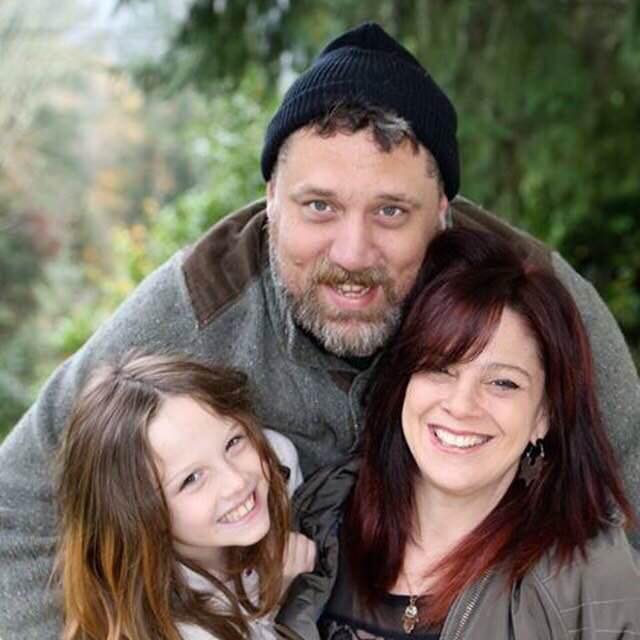
 Sean Davis for Astoria