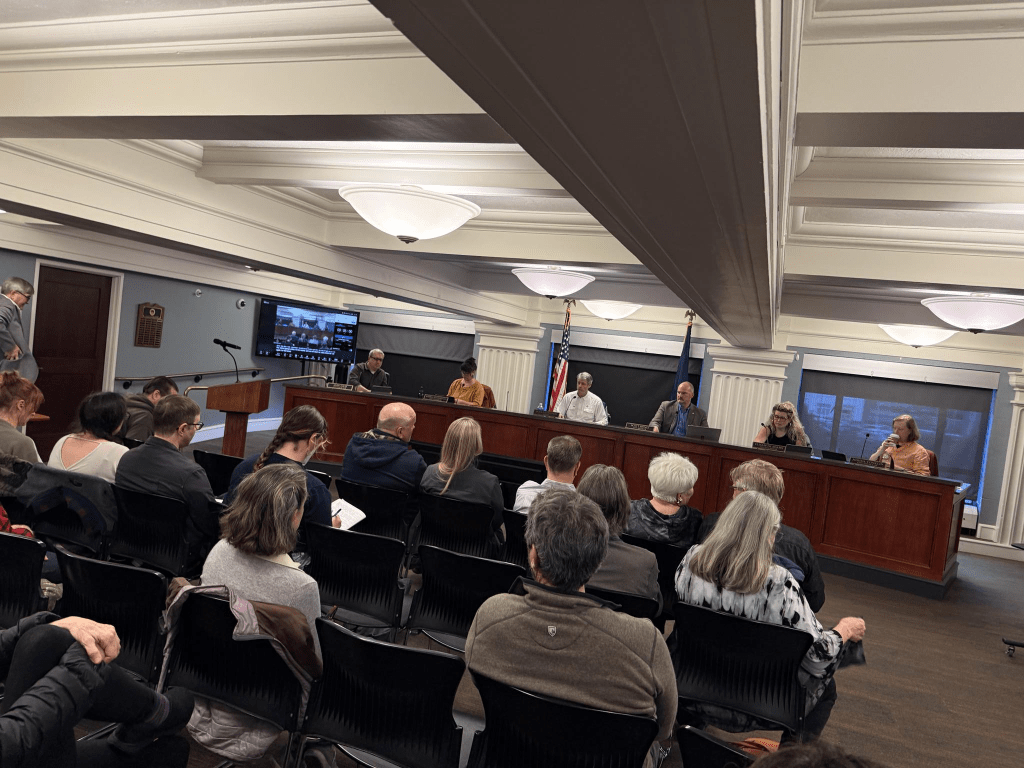
First I want to say that this is a very complicated problem, and I believe that to get to a real solutions with lasting successes, it must come from how we work on it as a nation, not just a city. Also, I’m not elected yet and these city leaders have a very difficult job balancing helping the unhoused and making our citizens happy. That said, I’m not coming at this issue from a comfortable distance.
I’ve seen homelessness in many forms, in the chaos of the aftermath of a violent revolution in Haiti in 1995, to war town Iraq in 2004, to post Hurricane Katrina in New Orleans in 2006, and in the streets of Northeast Portland when I didn’t wear a uniform and was simply a community member who wanted to help. For my efforts helping in my community the City of Portland awarded me with the Emily Gottfried Human Rights Award, and the city of Portland and the Royal Rosarians knighted me in 2017.
So when I say I believe in helping people, I mean it, but I also say I believe help must come with accountability.
It is easy to talk about homelessness as if it is some alien condition, something separate from the rest of us. Many of us look on the mess of a camp on our streets and get angry, believing the people who made the mess are morally weak or self destructive and therefore don’t deserve our taxes that we all worked so hard to make in these tough times. The truth is, there are many ways people end up sleeping on the streets, and once on the streets in that traumatic state, any mental illness is amplified. Drugs and alcohol are used as an escape and leads to addiction. Addiction worsens mental illness. Last night a woman from the streets testified that she had been raped 46 times, but she is trying to educate herself to get off the streets.
That should call forth compassion, but compassion is not the same thing as indulgence.
The one piece of constructive criticism I have for last night’s city council meeting is that the council should have defined what their version of a designated camp site would look like before asking the public to vote yes or no on it. I don’t mean ask the city staff to define it for them. I mean they should go out, do a ride along and speak to the police, speak to people on the front lines like the social workers and others helping the homeless, but also the people and businesses and citizens affected by the camps. Then come to the public and explain what they want the residents of Astoria to pay for with public money. That way the recent social media outrage would have been debunked immediately.
We also need to look at others who are actively working on this issue. For towns roughly in Astoria’s lane, the most credible approach is not, “just add more resources and hope.” But it also isn’t, “crack down harder and people will vanish.” Communities like Seaside, Newport, Lincoln County, and Hood River show that better outcomes come when compassion is paired with structure. The models that seem to work best are managed, supervised places with sanitation, rules, services, and a clear path toward shelter or housing. Just like another person testfied last night, “The end to homelessness is a home,” but the home needs to be given with conditions. In other words: resources and accountability. Just like it already says in our comprehensive plan.
That balance matters because resources without expectations will fail the citizens of our town, and they will fail the very people they are supposed to help. If you give out help with no expectations, no rules, and no requirement for the people receiving it to move forward, those resources are disposable. And when something has no expectation attached to it, it is treated to have no value. That is not cruelty. That is human nature. I’ve seen it in Third World countries, and I’ve seen it right here on the streets of our cities.
The truth is that most people in Astoria are carrying two emotions at once. They feel compassion for people sleeping outside, and they feel frustration at what disorder has done to sidewalks, neighborhoods, businesses, and public trust. Those feelings are not contradictory. They are honest.
So the goal should not be to choose between a hard heart and a blind eye. It should be to build something serious. And it may not be loved by everyone involved. Despite what our current political climate tells us, compromise is not a weakness. It is a strength.
As a candidate for the next mayoral election, I don’t believe it is appropriate for me to complain or second guess our mayor. At least not until we can debate in person. But I will say that if Astoria creates a designated campsite, it should be a temporary (for the residents), supervised, service-linked place with sanitation, security, clear expectations, and consequences for misconduct, and I will add that from my experience, the people we are trying to help should have meaningful roles and responsibilities in that camp. Get them invested in our area. Because poverty and desperation create crime. A person invested will help the situation, help themselves, and in the end, if they feel they helped build something special, it will be a success.
That, to me, is the real answer.
Not abandonment.
Not permissiveness.
Not slogans.
Resources and accountability, working together. That is how we help people while strengthening the community around them.
 Sean Davis for Astoria
Leave a comment